
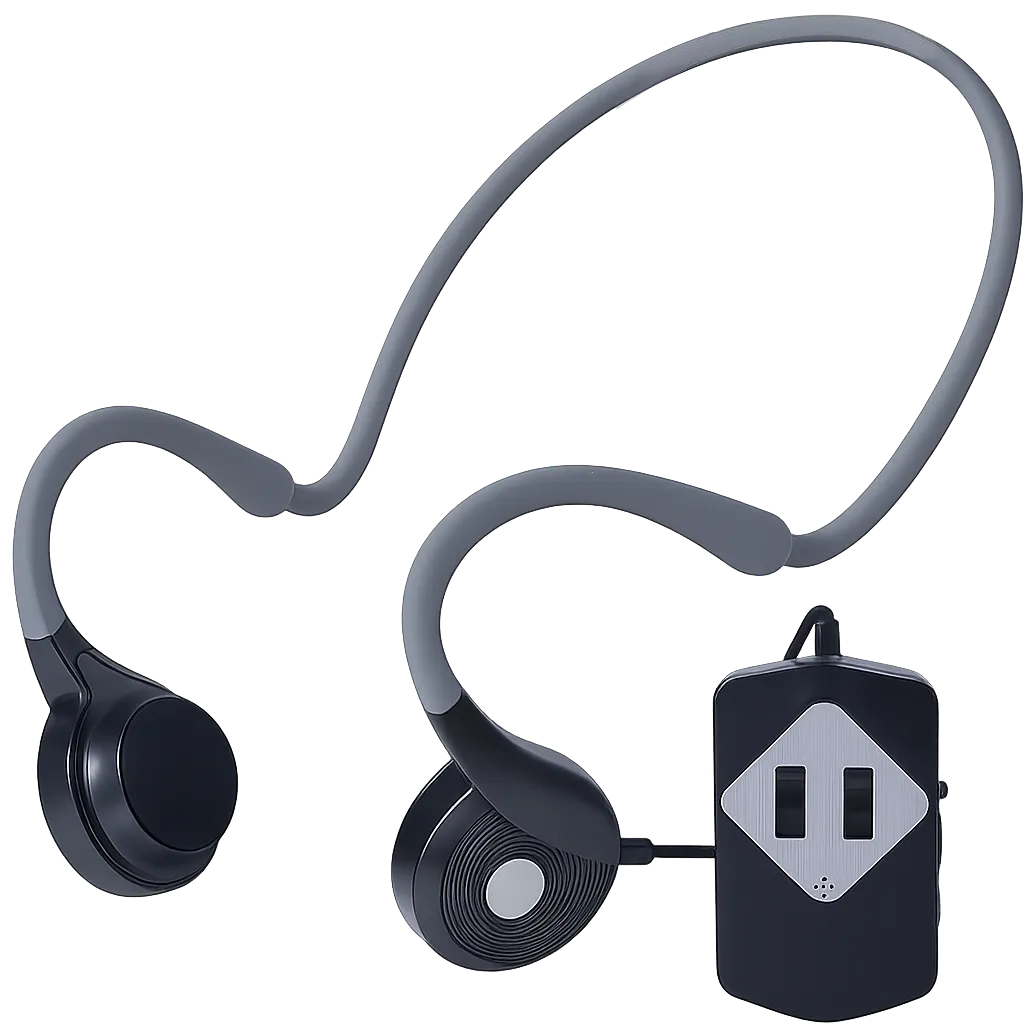
Bone Conduction Hearing Aids
Hear Clearly. Live Comfortably.
Bone conduction hearing aids send sound through gentle vibrations directly to your inner ear — bypassing the eardrum entirely. It’s a safe, non-invasive way to experience clearer speech and richer everyday sound.
What Is a Bone Conduction Hearing Aid?
A bone conduction hearing aid is a device that sends sound as vibrations through the bones of the skull directly to the inner ear, completely skipping the outer and middle ear. It’s especially helpful for people with conductive hearing loss, mixed hearing loss, or single-sided deafness.
These devices have grown into a popular alternative for people experiencing hearing loss more broadly. Rather than relying on the eardrum, they carry sound vibrations straight to the inner ear through the skull — a technology that’s advanced considerably in recent years, giving users a genuinely different way to experience sound.

How Bone Conduction Hearing Works
Sound Is Captured
The device's microphone picks up sound from the surrounding environment.
Converted to Vibration
Sound is converted into gentle mechanical vibrations by bone conduction transducer.
Carried Through the Skull
Vibrations travel through the bones of the skull, straight toward the inner ear.
Bypass Outer & Middle Ear
The eardrum and middle ear are skipped entirely, useful for mixed, conductive, or single-sided hearing loss.
Built for ears of every shape, including microtia
Some patients aren’t able to wear conventional in-ear hearing aids at all — this section speaks to them directly and explains why bone conduction is often the recommended solution.
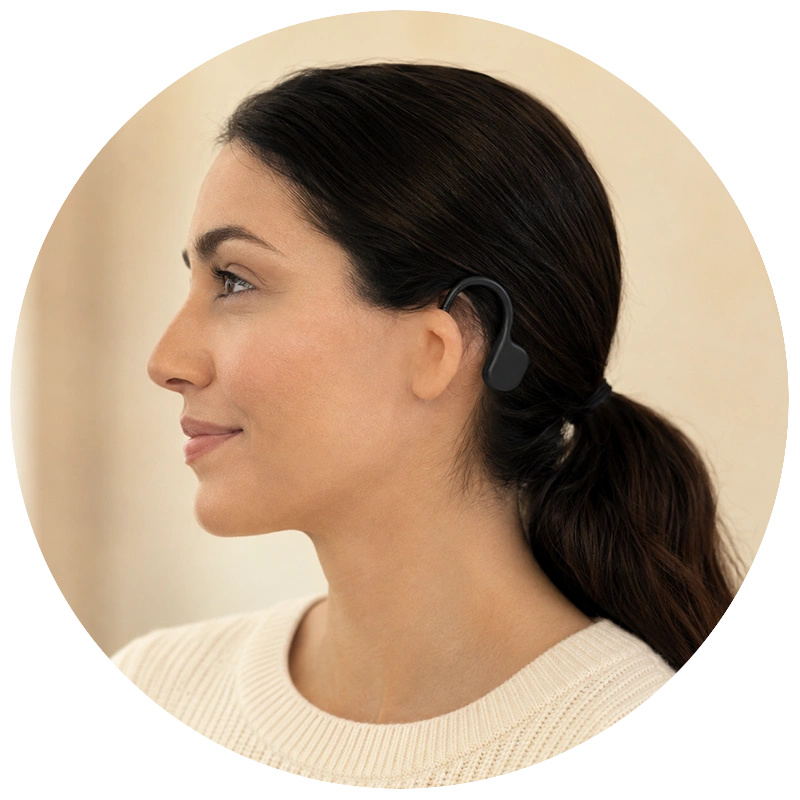
What is microtia?
Microtia is a condition present from birth in which the outer ear (the visible part, or “pinna”) is underdeveloped, unusually small, or absent. It’s sometimes accompanied by atresia — a narrow or missing ear canal. Because there’s little or no canal to fit a device into, conventional in-ear hearing aids often can’t be worn, or don’t help.
Why bone conduction works here
Bone conduction hearing aids don’t rely on the ear canal at all. The device rests gently on the mastoid bone behind the ear and sends sound as vibrations straight through the skull to the inner ear — completely bypassing the outer ear and canal. It’s one of the most common hearing solutions recommended for microtia and atresia patients.


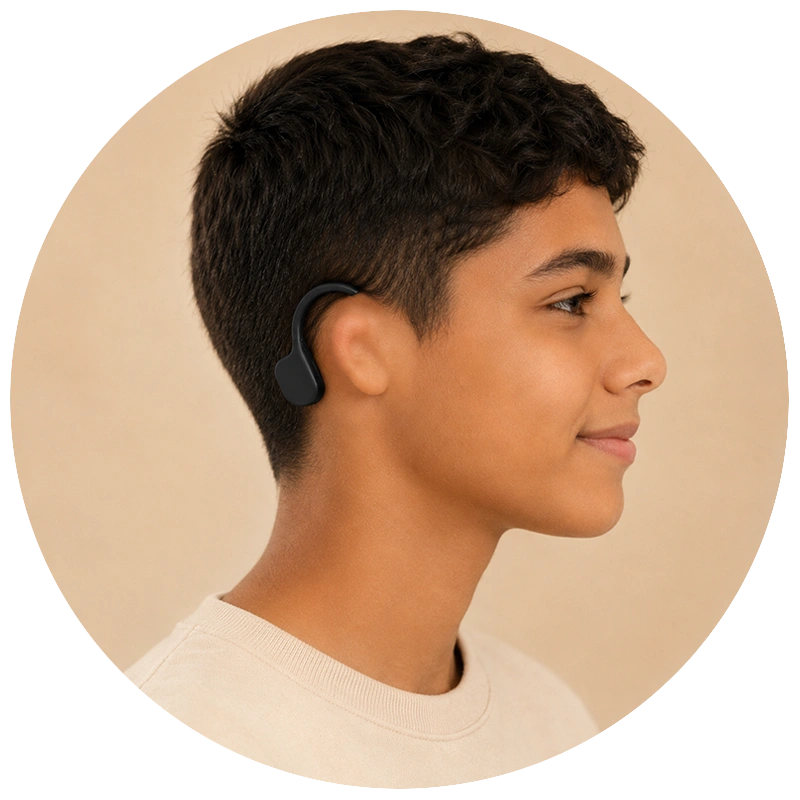
Why People Choose Bone Conduction
Instead of channeling sound through the ear canal, bone conduction technology transmits sound as gentle vibrations through the bones of the skull, carrying it directly to the inner ear. This bypasses the outer ear and eardrum altogether, allowing many users to experience clearer, more natural hearing without a speaker sitting deep inside the ear canal.
Non-invasive & open-ear
Nothing is inserted into the ear canal, so ears stay open to ambient sound.
Clearer speech in daily environments
Designed to support better speech understanding in everyday settings.
An alternative when in-ear aids don't work
A good option for those who struggle with comfort, ear shape, or skin sensitivity.
Comfortable for extended wear
No pressure or blockage, making it easier to wear all day.
Bone conduction technology designed to fit naturally into your everyday life.
Built for Everyday
Comfort

Left / Right Channel Adjustment
Adjust volume separately for each side to support balanced hearing.

Ultra-Long Battery Life
Built-in 750mAh battery delivers approximately 20 hours of use on a single charge.

Stylish, Lightweight Design
Comfortable for all-day wear with a portable control box and clothing clip.

3 Listening Modes
Choose from three pickup modes tailored to different hearing needs and environments.
Is Bone Conduction Right for You?
Bone conduction hearing aids are especially suited to people who prefer an open-ear wearing style, or who have found ordinary in-ear hearing aids uncomfortable or difficult to use. They’re a practical, everyday hearing support option for a wide range of users — including those with microtia, atresia, or other ear-shape differences that make conventional in-ear aids difficult or impossible to wear, as well as anyone seeking a more comfortable alternative.
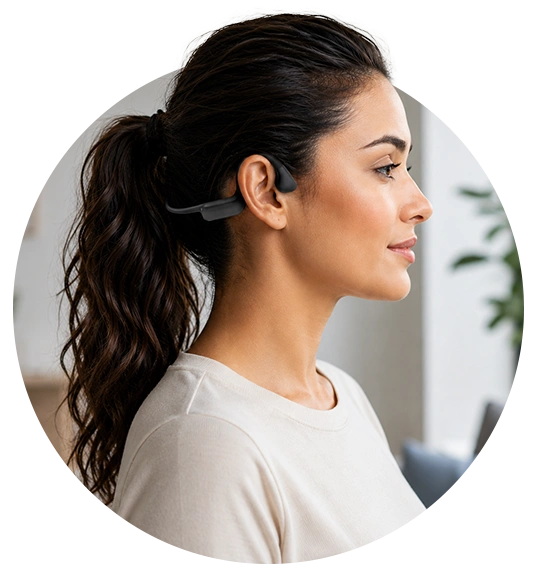
Set Up in Four Simple Steps
1. Connect:
Insert the earphone cable into the control box.
2. Wear:
Clip the control box onto your clothing using the back clip.
3. Position:
Place the bone conduction vibrators gently in front of each ear.
4. Adjust:
Set the volume and mode to your comfort level.
- Press and hold the power button for 3 seconds to turn the device on or off.
- Short-press the mode button to switch between the 3 listening modes.
- Use the + and – buttons to adjust volume.
- LED indicators show current mode, charging status, and battery level.
Technical Details
| Specification | Detail |
|---|---|
|
Hearing Aid Type |
Bone Conduction |
|
Battery |
750mAh Polymer Battery |
|
Battery Life |
Approx. 20 hours |
|
Charging Time |
Approx. 2 hours |
|
Speaker Type |
Bone Conduction Speaker |
|
Frequency Response |
250Hz – 5500Hz |
|
Sound Pressure Level |
118dB |
|
Microphone Sensitivity |
-38 +/- 1dB |
|
Charging Cable |
Type-C, 30cm |
Want the Full Technical Details?
Download the complete DSL SK 50 product catalogue for full specifications, usage instructions, and other information.
Common Questions
Yes. It's a non-invasive method that doesn't place anything inside the ear canal.
People who prefer an open-ear fit, or who've had difficulty with traditional in-ear hearing aids.
Yes — this is one of its most common uses. Because the device sits on the bone behind the ear and doesn't need to enter the ear canal, it works whether the outer ear is fully formed or not.
The DSL SK 50 offers approximately 20 hours of use per charge, with a charge time of about 2 hours.
Yes — the DSL SK 50 has independent left/right channel volume adjustment.
We recommend consulting a hearing professional first, as results vary by individual hearing condition.